
Softening
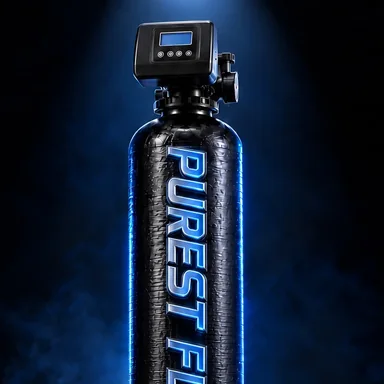
PurestShield. Hard water, softened at the source.
PurestShield is a metered, salt-based ion-exchange softener. It is designed to remove the calcium and magnesium that make water hard, so scale builds up less on fixtures, glass and appliances.
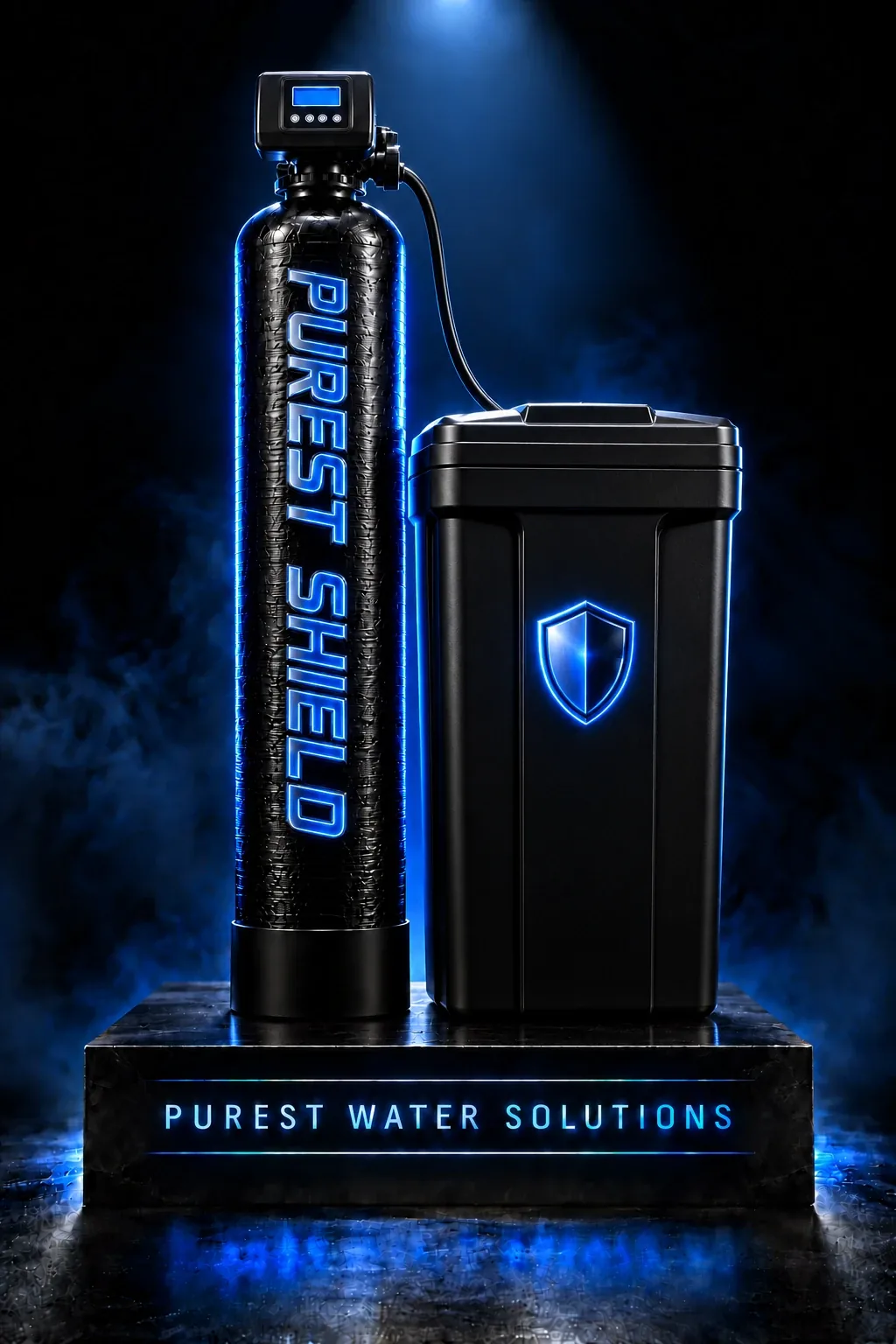
- Type
- Metered salt-based softener
- Where it goes
- Main water line
- Handles
- Hardness: calcium and magnesium
- Starts with
- A free water test
What it does
What softening changes
- 01
Softens by ion exchange
Hard water passes through a mineral tank of resin, where calcium and magnesium ions are exchanged for sodium or potassium ions.
- 02
Recharges itself
When the resin reaches its programmed capacity, the control valve draws brine from the brine tank and recharges it for the next service cycle.
- 03
Meters your water use
Regeneration is demand based, so the metered control responds to the water your household actually uses.
- 04
Protects the house
With fewer scale-forming minerals, soap lathers better, and the scale that hardness leaves in fixtures, water heaters, dishwashers and laundry equipment is reduced.
Signs the water is hard
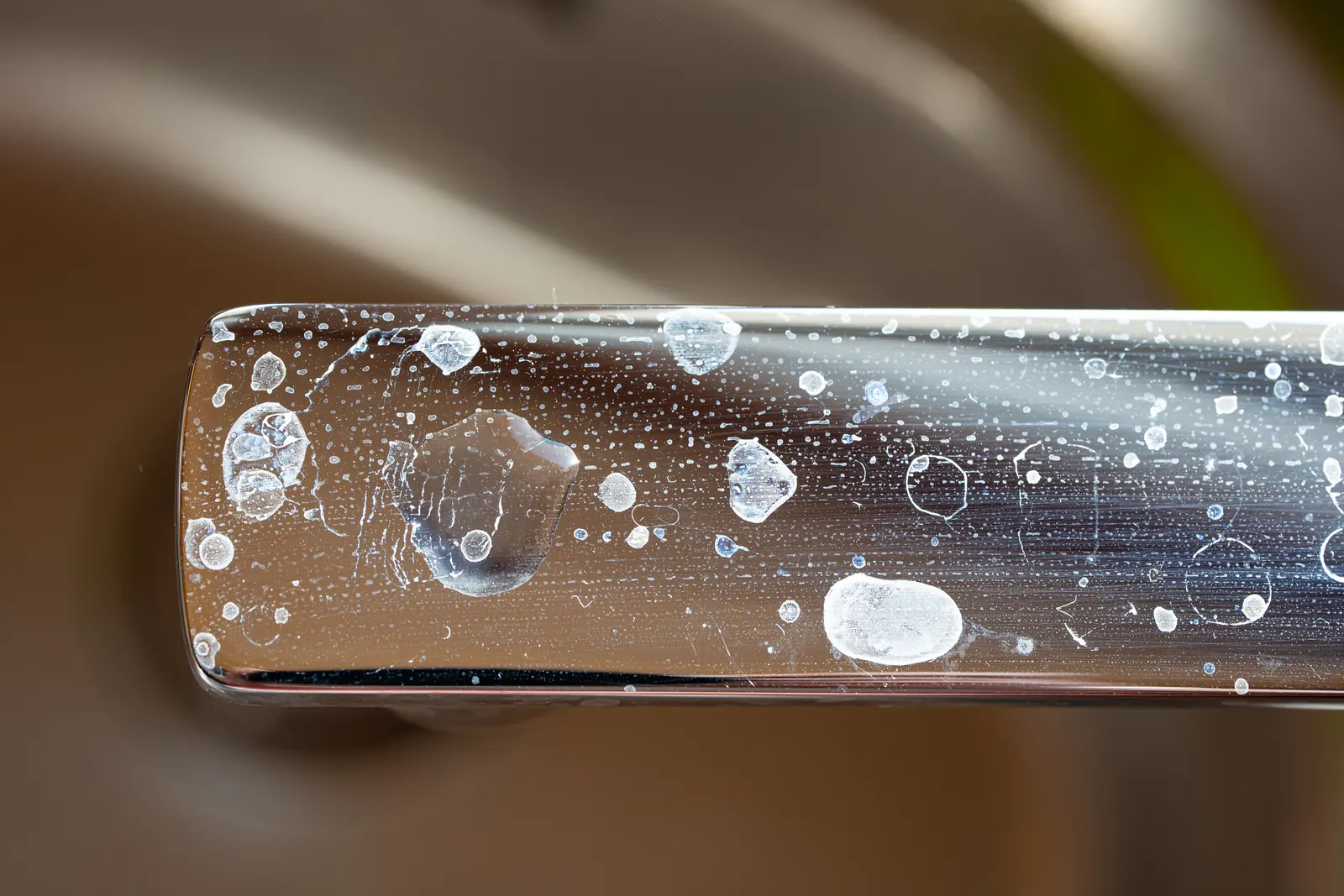
- Mineral deposits on glass and dishes
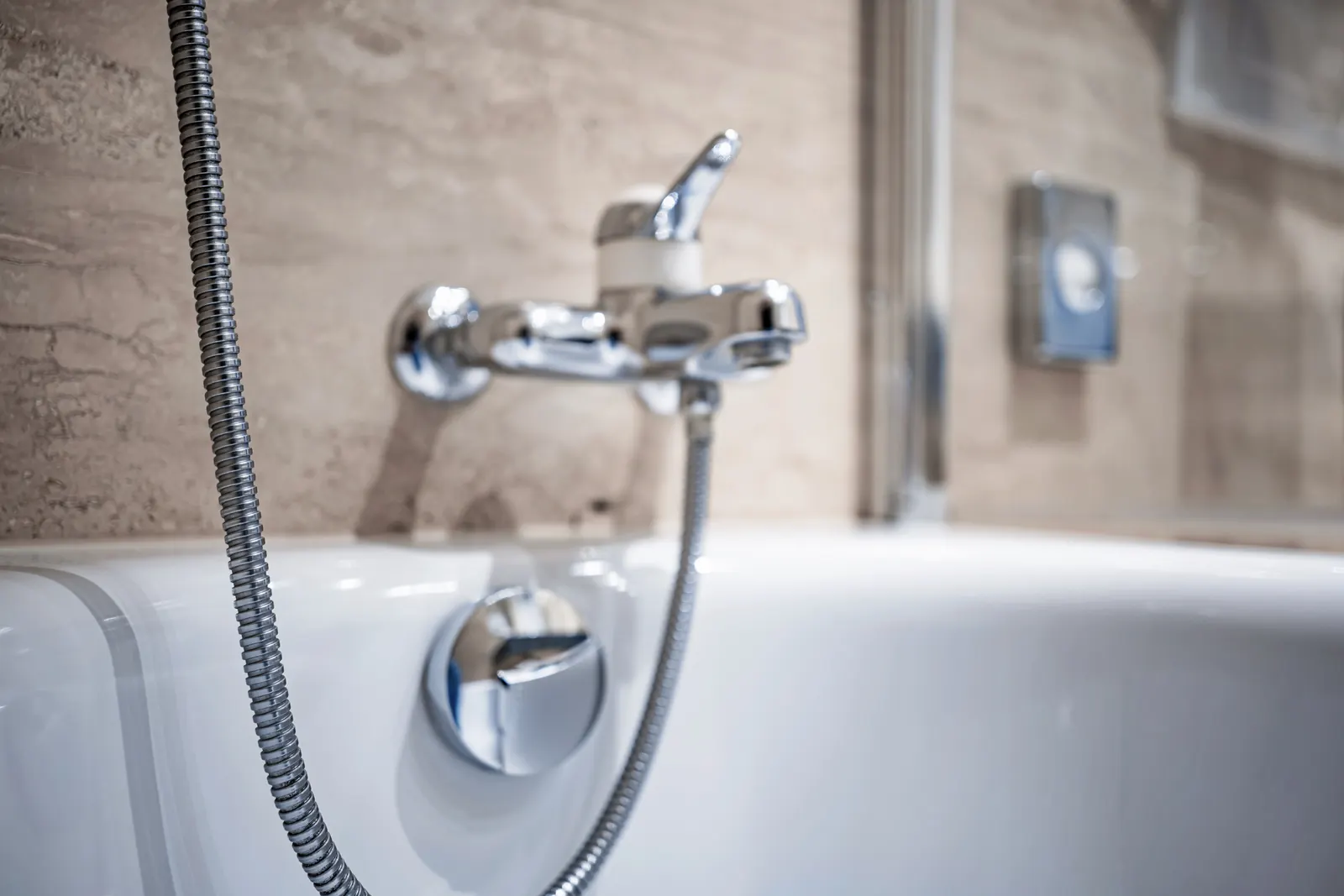
- Scale on faucets and fixtures
- Soap that does not lather well
- More soap used on every wash
- Buildup inside the water heater
- Scale on appliances
The parts
Three parts do the work
Hover or tap a marker, or pick a part from the list. A part is marked only where the image shows it.
How it goes
From the test to PurestShield
- 01
Free water test
We test your water for hardness, chlorine, TDS, pH, iron and manganese. It costs nothing and it carries no obligation.
- 02
A recommendation
Your results decide the system. You see a fixed price after the test, never before it.
- 03
Installation
PurestShield goes in at the main water line, with its settings matched to the hardness the test found.
- 04
Treated water, every day
Softened water at every tap, and less scale building up in the equipment that uses it.
Where it fits
Chosen from your water, not from a catalogue.
PurestShield goes in at the main water line, with its settings matched to your water's hardness and your household's demand. Softened water then reaches every tap and appliance. The free water test measures your hardness first.
Every recommendation starts with the free water test, and the price is fixed after the test, never before it.

Gallery
PurestShield, and the rooms it serves
PurestShield
Questions about this system
How do I know if my water is hard?
Common signs are mineral deposits on glass and fixtures, soap that does not lather well and more soap used on every wash. A free water test measures your exact hardness.
How does a water softener work?
A softener uses ion exchange. Hard water passes through resin that swaps calcium and magnesium ions for sodium or potassium ions. When the resin reaches its programmed capacity, brine from the brine tank recharges it.
What does metered mean?
The control valve responds to the water your household actually uses, so regeneration follows demand rather than a fixed timetable.
What is the difference between a softener and a filter?
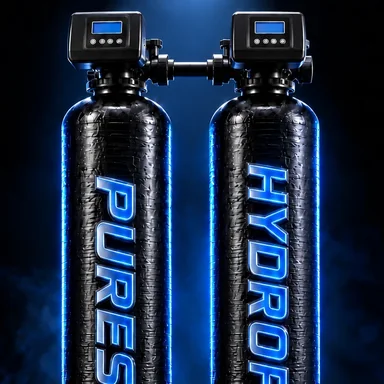
A softener is designed to remove the minerals that cause hardness. A filter is designed to reduce things like chlorine, taste and odor. Purest HydroFlo combines both in one system.
How do I choose between PurestShield and Purest Soft?
Both are salt-based softeners with one tank and a brine tank. Your own water decides which one fits, and the free water test is how that gets decided.
Pairs well with
Systems that work alongside it
Next step
Ready to look at PurestShield?
Book a free water test first. We recommend what your readings call for, and the price is fixed after the test.